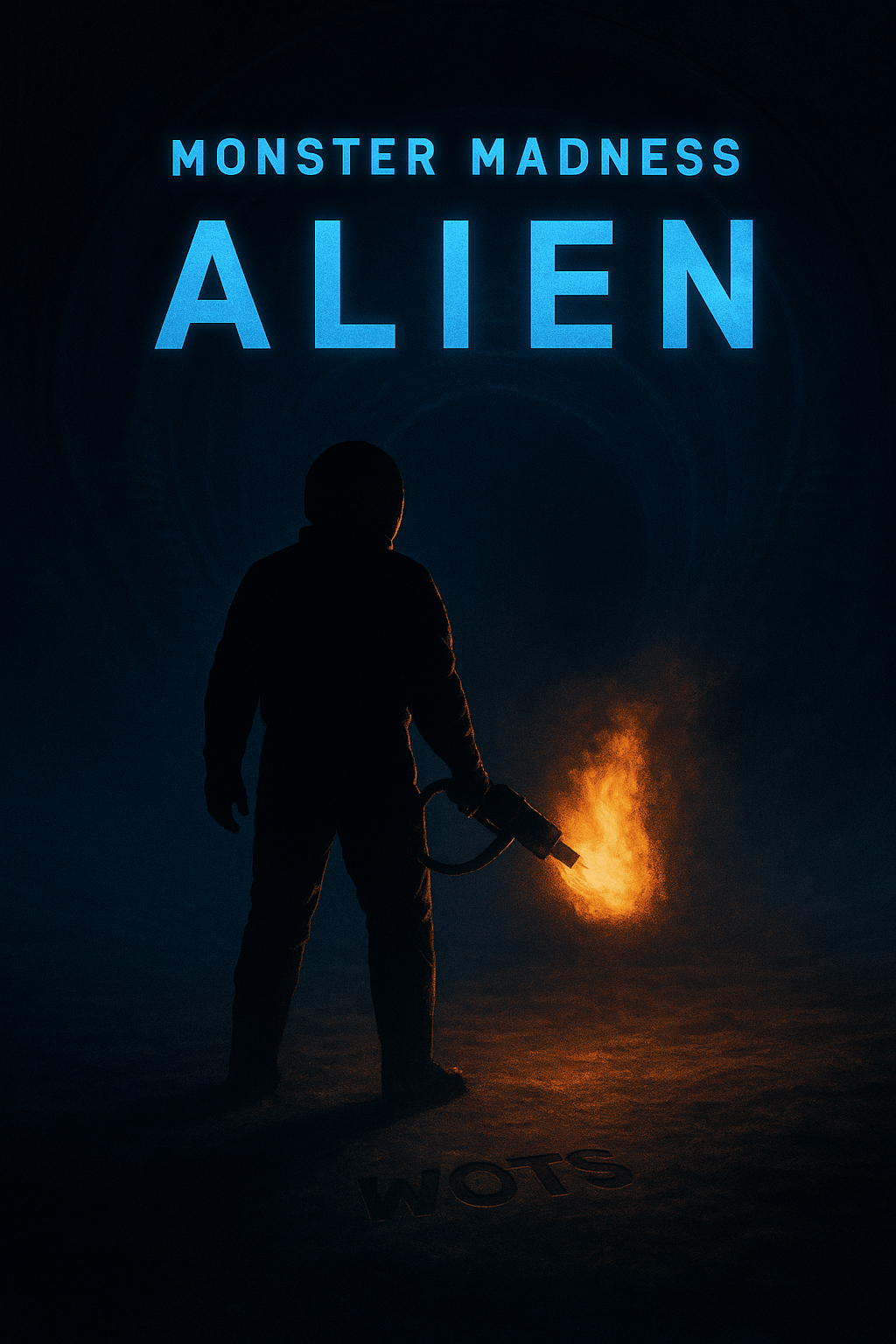
Welcome to Monster Madness
Welcome to the SPOOOOKIEST time of the year: October! Each week, we’re watching a horror movie and peeling back the layers of what makes it great—keeping spoilers light and chills heavy.
This week, we’re boarding the doomed ship Nostromo to revisit one of cinema’s greatest monsters: Ridley Scott’s Alien (1979).
The Calm Before the Chestburst
Alien walks a perfect line between horror and science fiction. It satisfies both camps, and yet—like its titular creature—it transcends them.
The story centers on the space freighter Nostromo, a working-class ship where the crew fights not just for survival, but for a paycheck. They’re employees of an entity known simply as The Company, setting the stage for the film’s quiet anti-capitalist thread.
On their return trip to Earth, they’re prematurely awakened by Mother, the ship’s computer. Like bleary-eyed teens forced out of bed too early, the crew is confused, grumpy, and about to have a very bad day. A strange beacon is calling from a nearby planet—and if they don’t investigate, they lose their shares.
So, they land. And nothing good happens after that.
Isolation in Deep Space
Alien is a masterclass in the slow burn. The first forty minutes feel more like classic sci-fi than horror—dusty corridors, eerie transmissions, and a creeping sense that something isn’t right.
Then the horror begins to drip in. Not with jump scares or monsters leaping from the shadows, but through atmosphere. The silence of space. The claustrophobic halls. The knowledge that help will never come.
Even when the Alien appears, it’s rarely shown fully. Most deaths happen offscreen or in blinding flashes. The restraint makes it scarier. It’s what you don’t see that gets you.
The Cast, the Crew, the Creature
Directed by Ridley Scott, Alien also marked the breakout of Sigourney Weaver, establishing her as one of the most iconic leads in movie history. Scott would go on to direct Blade Runner, Gladiator, and The Martian, but his precision here remains unmatched.
Supporting roles from Ian Holm, Veronica Cartwright, and others give the Nostromo its lived-in authenticity—this feels like a real ship, crewed by real people just trying to do their jobs. Or in Jonesy’s case, a real cat just trying to relax.
And then there’s H.R. Giger’s design. The creature work, from the facehugger to the chestburster, remains a stunning example of practical horror. Even decades later, those moments hit hard.
The Legacy of the Xenomorph
Like The Thing, Alien wasn’t universally beloved at first. But over time, it became one of the most influential horror films ever made.
It spawned sequels, imitators, and nightmares. It defined what “haunted house in space” truly means.
So whether you’re a sci-fi junkie, a horror lover, or just a fan of great filmmaking—make sure Alien is on your October rotation.
Just remember: in space, no one can hear you scream.
Final Word
Alien endures because it understands fear at its core: not the monster itself, but the waiting, the silence, the unknown.
And somehow, even knowing exactly what’s coming, I still hold my breath every single time.


 What’s On The Shelf | Games, Music & Culture
Leave a comment