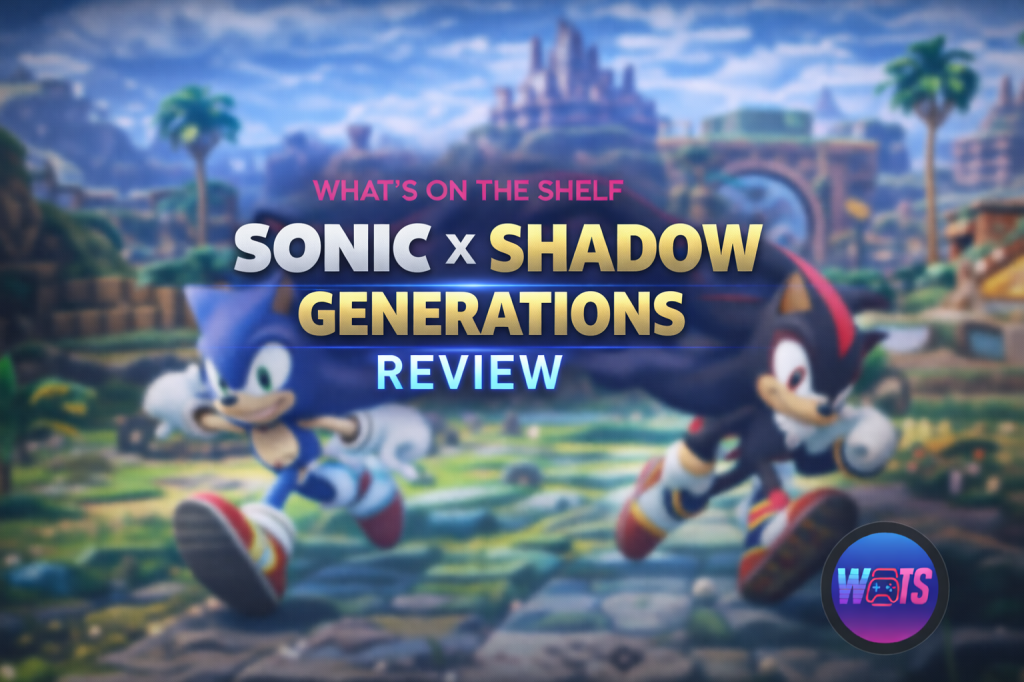
Sonic games have always been the poster child for goofy voice acting, fast sidescrolling action, and the kind of platforming jank that somehow feels endearing. Sonic x Shadow Generations is a re-release of the beloved Sonic Generations from the Xbox 360 era, brought into the modern sphere with updated visuals and new content centered on Sonic’s edgier rival. It’s half a victory lap, half a nostalgia bomb, and—dare I say—one of the stronger Sonic titles ever made. But is that really saying much?
I’ve got a lengthy history with the Blue Blur. I played through the Genesis classics, sunk hours into Adventure and Adventure 2: Battle, and even dabbled in the cult hit for “True Gamers,” Sonic Forces. I adored Sonic Mania. Through all those highs and lows, I’ve learned one thing: when Sonic works, it’s magic. When he doesn’t…well, let’s just say it’s memorable for other reasons.
The Story (Such As It Is)
Cards on the table: I skipped every single cutscene in this game. It’s not that the writing is bad—okay, it probably is—but in a game all about speed, I just don’t care what convoluted nonsense the cast is spouting. Still, for context: Sonic is pulled into an anomaly called the White Space by a big bad known as the Time Eater. Along the way, he encounters his classic 2D self, and together they run through a highlight reel of Sonic’s past adventures to restore color and order to the world.
Shadow gets a similar treatment in his campaign. He’s dragged into White Space to face off against Black Doom (yes, from Shadow the Hedgehog), leading to his own remix of stages and boss battles. None of it is groundbreaking, but it frames the game less as a cohesive narrative and more as a celebration of Sonic’s history—fitting, since the original release was tied to Sonic’s birthday.
Acts Old and New
Each level is split into two Acts. Act 1 plays like a throwback to the Genesis era: classic 2D side-scrolling with spin dashes and jumps. Act 2, on the other hand, caters to the MySpace generation—modern 3D speed runs with Boost mechanics and Homing Attacks.
Shadow doesn’t get a “Classic” version, so he takes point in both Acts. That works out fine, since his campaign is spiced up with unique “doom powers.” As you progress, Shadow unlocks abilities like lightning bolts, manta ray surfing, flying transformations, and even a weird squid-monster form. It adds a welcome layer of verticality and variety that keeps his stages feeling fresh.
Nostalgia Turned Up to 11
The biggest draw here is nostalgia, and the game delivers. You blaze through iconic levels and bosses reimagined with more depth and detail. It’s not just a copy-paste job—the developers leaned into the thrill of replaying a familiar space in two completely different ways. Beat both Acts, and you’ll unlock side challenges that eventually open the doors to boss encounters.
Whether you grew up with pixel Sonic or edgy Dreamcast Sonic, there’s a hit of dopamine waiting. The levels are love letters to fans, and even though you’re essentially playing each one twice, it rarely feels lazy.
The Good, The Jank, and The Funny Deaths
Now, let’s be clear: this is still a Sonic game, which means the jank is alive and well. Boosting in 3D is exhilarating…until it isn’t. More than a few times, I hit Boost only to rocket into a wall, get wedged between platforms, and plummet to my death. It happened at least ten times. Thankfully, the game is generous with checkpoints, so frustration never outweighed fun. If anything, it reminded me of the absurd physics from Sonic Adventure—which I’ll admit, I found oddly charming.
Still, it’s baffling that Sonic Team hasn’t ironed out these issues after decades of making these games. You’d think the world’s fastest hedgehog wouldn’t get hung up on geometry, but here we are.
Shadow Steals the Show
While Sonic’s campaign is solid, Shadow’s content elevates the package. His story culminates in the Radical Highway stage, and my inner Dreamcast kid was over the moon. Radical Highway has always been one of Sonic’s best stages (second only to City Escape or Pumpkin Hill, depending on your taste), and this version nails the vibe perfectly. The speed, the edge, the chaos—it feels like Shadow finally gets the spotlight he deserves.
The finale against Black Doom might not win any awards for originality, but damn if it didn’t make me grin. Throughout the campaign I kept wondering, “Where’s Radical Highway?” And when the game finally threw it at me with both fists, it felt like Sonic Team yelling, “Right here, motherfucker.” It’s pure fan service, and it works.
The Double-Edged Spin Dash
That dual-Act structure cuts both ways. On one hand, it’s a neat gimmick that lets you experience two flavors of Sonic in every level. On the other, it can feel repetitive if you clearly prefer one style. Personally, I’m a 3D Sonic fan through and through. I’ve played so much Adventure 2: Battle that the Chao animal stat boosts are basically carved into my brain. Act 1 wasn’t bad, especially with Shadow’s added powers, but I wouldn’t want a whole game built around it.
And while nostalgia is fun, it only goes so far. At times, replaying familiar zones felt more like duty than joy. That’s the tricky balance of a game like this: it has to honor the past without leaning too hard on it.
Final Thoughts
Sonic x Shadow Generations is a fast, funny, occasionally frustrating ride through one of gaming’s most eccentric franchises. It doesn’t fix Sonic’s age-old issues—if you hate Sonic jank, nothing here will change your mind. But if you’ve ever loved the hedgehog, this is one of the better ways to revisit his history.
The Sonic campaign is a solid nostalgia trip. The Shadow campaign is the real star, with creative powers and a finale that taps into pure childhood joy. Together, they make for a package that’s worth a spin, even if the repetition and physics hiccups drag it down at times.
It’s not perfect. It’s not polished. But it is Sonic, in all his goofy, speedy glory. And sometimes, that’s all you really need.



 What’s On The Shelf | Games, Music & Culture
Leave a comment