I’ve recently been playing through Clair Obscur: Expedition 33, and I found myself a little depressed when PlayStation informed me I was already 67% done. Not because I’m not enjoying it—I very much am—but because that number quietly means something else: the end is closer than I expected.
Once I factor in a bit of cleanup and whatever post-game content I missed, I’m probably looking at around 30 hours total. And honestly? That’s fine. Thirty hours is a perfectly acceptable amount of time to spend with a game. But it did spark a familiar question—one I’ve been circling more and more as I get older.
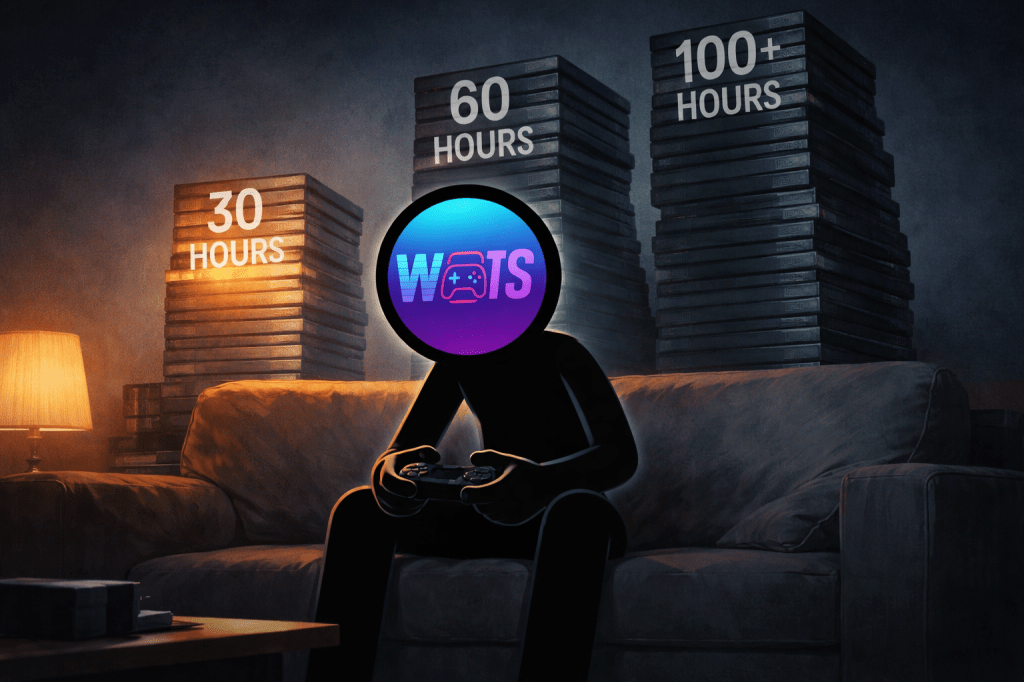
How much time girth is simply too much for the modern gamer to handle?
When I was younger—stronger, dumber, and powered entirely by Mountain Dew—I had no concept of limits. My daily schedule was simple: wake up, go to school, play Call of Duty: Modern Warfare 2, sleep, repeat. I was the living embodiment of one of those goofy Hobby Lobby wall signs about Real Gamers.
Back in the MW2 days, your friends list proudly displayed your total multiplayer time. Mine read something like 31 days, 7 hours, and 28 minutes. That’s over 45,000 minutes spent in one game’s multiplayer mode alone. Not even counting the campaign—which, yes, I beat on Veteran, because of course I did.
To put that in terms we can all understand, that’s roughly the equivalent of watching the critically acclaimed film Happy Feet 417 times in a row. A horrifying number, really.
Growing up alongside the video game industry has been strange. The bulk of today’s players sit in the 30–40 age range, roughly where Millennials land. We saved time by not going out or being social, and we spent it beating Skyrim again. But the scale still tips younger. If Millennials make up the lion’s share, Zoomers are right behind them—not just because there are more of them, but because they’re far more plugged in.
Some light research backs that up. Player distribution goes Millennials, then Zoomers, then Gen X, followed by about 17% in the 50–60 range, and a surprising 8% in the 60–65 pre-retirement bracket. Pulling from your Roth IRA to buy Rosalina Amiibos. While the 30–40 crowd represents the largest group overall, the 20–30 range actually edges them out in time spent playing.
That checks out. Early adulthood is the perfect storm: first disposable income, fewer responsibilities, limited impulse control, and a world that increasingly makes escapism feel reasonable. It’s either video games, smoking, or therapy.
Now I’m a parent with a full-time job, going back to school part-time, and nursing a very real millennial knee and back situation. My free time is precious and aggressively finite. Wednesday night is my Gaming Sabbath. I’ve been playing online with the same two idiots for what feels like ten years now. It might actually be ten years. Christ.
That gives me about three uninterrupted hours for online games—currently Monster Hunter Rise—and whatever scraps of time I can claw back during the week for single-player stuff, currently Clair Obscur.
Because of that, I think we’re approaching the end of the 60+ hour single-player game—at least for a big chunk of the audience. My clearest anecdotal evidence is this: I bought the The Elder Scrolls IV: Oblivion remaster with clear eyes and a full heart. I escaped the prison tutorial… and immediately stopped playing.
It’s not that the game is bad. It’s not that I don’t want to play it. It’s that the sheer amount of time required to meaningfully engage with a game like that fills me with dread. The idea of trekking across Cyrodiil for an hour only to shut the game off because my child needs to be fed again—like I didn’t just do that yesterday—makes me not want to start at all.
I got Ghost of Yōtei for Christmas, and almost immediately I did what I now do with every major release: I checked HowLongToBeat. That number has become the ultimate barometer of whether a game is next up… or relegated to the ever-growing “I’ll get to it eventually” pile.
The older I get, the more I appreciate games that promise a tight experience—strong mechanics, a focused story, and an ending that arrives before life pulls me away again. That’s why I’ve been playing so many indie games lately. More often than not, they offer condensed experiences that feel intentional rather than bloated.
Back to the original question: what’s my optimal game length?
Some recent examples make it clear. Dispatch was one of my Top Shelf Games of 2025 and wrapped up around 10 hours. DK Bonanza clocked in near 20. Doom: The Dark Ages ran about 15. Metal Gear Solid 3: Snake Eater took roughly 12.
Once a game crosses 25 hours, it needs to earn that time. Past 30, I start to waver. Hades II sits right in that zone, and I’ve bounced off and back onto it more than once.
Difficulty plays a role too. Hollow Knight: Silksong is supposedly around 25 hours, but because I’m bad at games—and especially bad at platforming—it remains patiently waiting in my digital library, judging me.
As gamers age and accumulate real-world responsibilities, I think the industry is headed toward a fork in the road. Either developers lean harder into long-term, short-burst games like Fortnite, tighten single-player experiences toward that 20-hour sweet spot, or they say “screw it” and keep doing what they’re doing.
No matter what, I’ll still be excited when a new Elder Scrolls or Fallout: New Vegas remake is announced. I’ll just also be quietly sweating, wondering where I’m supposed to find a four-hour uninterrupted session ever
 What’s On The Shelf | Games, Music & Culture
Leave a comment